Testing heavy metals in makeup to determine trace levels of potentially toxic metals in raw materials or products such as lead in lipstick, helping you to produce safe and regulatory compliant products
Heavy metals in cosmetics pose potential health risks to consumers. Arsenic, cadmium, chromium, cobalt, lead, mercury, and nickel are elements that are commonly referred to as "heavy metals" or "toxic metals." They can be toxic to humans and this depends on how we are exposed to them, at what levels, for how long and how frequently this occurs. There is an expectation that dermal exposure is typically the most common route as many product types are applied to the skin. Some consumers can develop sensitivity towards these elements such as nickel (Ni) or chromium (Cr) which are are strong skin sensitizers and exposure to them can potentially lead to allergic contact dermatitis or other skin problems. There is also potential for oral exposure for products such as lipsticks and those used in and around the mouth as these can be ingested or absorbed.
Our cosmetics heavy metals testing expertise
Our centre of excellence for cosmetics testing, LaCoMeD, located near Chalon-sur-Saône in France is a COFRAC accredited laboratory. The laboratory provides high-performance and rapid solutions for trace heavy metals testing and elemental impurities analysis in all types of matrices, raw materials or finished cosmetic products using highly sensitive inductively coupled plasma - mass spectrometry (ICP-MS) methods. Supporting your raw materials qualification programs, research and development and production quality control, we can provide technical advice and testing services including:
- Heavy metal testing according to ISO standard ISO 21392: 2021 for measurement of chromium, cobalt, nickel, cadmium, lead, antimony or arsenic in cosmetics using ICP-MS techniques.
- Determination of heavy metals in cosmetics including arsenic, cadmium, mercury, lead, and antimony according to the COFRAC accredited internal method. Accreditation n ° 1-2411 (Scope available on www.cofrac.fr).
- ICP-MS (inductively coupled plasma with mass spectrometry detection) or ICP-OES (inductively coupled plasma with optical emission spectrometry detection) technologies
- Routine screening testing for up to 21 elements (not under our COFRAC scope) for raw materials and cosmetic products
- Expertise in sample preparation methods including open vessel digestion or microwave digestion with a wide range of acidic condition (such as HF for complete mineralization on complex matrixes)
- Screening and comparative elemental analysis: Determination of more than 60 trace metal elements
Why work with Intertek LaCoMeD as your heavy metals testing partner?
We offer a toolbox of Total Quality Assurance Solutions for cosmetics testing, scientific, and regulatory consulting, supporting your product innovation and raw materials qualification through to production to help you ensure the safety of your products.
Centre of Excellence: Over 20+ years of analytical testing experience supporting beauty product innovation and production
Highly Skilled Scientists: A proven track record of first-to-market approaches to solve complex regulatory and quality challenges.
Global Regulatory Support: Expertise helps ensure compliance with key cosmetic regulations through testing for contaminants, allergens, restricted or banned substances, preservatives, metals, and more.
Accredited Laboratory: The LaCoMeD laboratory holds ISO 9001 and ISO 17025 (COFRAC n°1-2411, Scope is available on www.cofrac.fr.) accreditations, assuring competence, quality and reliability of testing results.
End-to-End Support: From raw materials and formulation analysis to finished cosmetics products and packaging testing
Support for Production & Quality Control: Robust testing solutions help identify and resolve quality issues during production
Data-Driven Decisions: Strong analytical insight helps our clients to reduce risk, optimise cosmetic formulations and ensure trusted, compliant products.
Regulatory drivers for metals testing in cosmetics
Multiple countries or regions around the world have established legislation restricting heavy metals in cosmetics or personal care products. In Europe, for example, Annex II of Regulation (EC) 1223 / 2009 prohibits the use of heavy metals or heavy metals compounds containing lead, cadmium, arsenic, antimony and mercury in cosmetics. However, Article 17 of the regulation states that non-intended presence of a small quantity of a prohibited substance, stemming from impurities of natural or synthetic ingredients, the manufacturing process, storage, migration from packaging, which is technically unavoidable in good manufacturing practice, shall be permitted provided that such presence is in conformity with Article 3 (A cosmetic product made available on the market shall be safe for human health when used under normal or reasonably foreseeable conditions of use).
Mercury in cosmetics: Under Regulation (EC) 1223 / 2009, there are some exceptions for mercury compounds which are permitted under Annex V to be used as preservatives. These include thiomersal and some phenylmercuric salts where the maximum concentration of Hg in a ready for use preparation should remain fixed at 0.007%. According to the US FDA heavy metal limits in cosmetics, mercury compounds are allowed in cosmetics only as preservatives in eye area products. They may be used only in a very small amount - mercury levels must not be more than 65 parts per million (ppm) in the finished product, and only if no other effective and safe preservative is available. Mercury is not allowed in any other cosmetic products except in a trace amount of less than 1 ppm and only if its presence is unavoidable under good manufacturing practice (GMP).
Lead in cosmetics: In the EU. lead and its compounds are listed in Annex II (List of substances prohibited in cosmetic products) of Regulation (EC) 1223 / 2009. The FDA has published draft guidance for industry that recommends a maximum level of 10 ppm for lead in makeup. This guidance applies to lead in lipsticks, lip glosses, and lip liners and externally applied cosmetics (such as eye shadows, blushes, shampoos, and body lotions) marketed in the United States.
Arsenic in cosmetics: In the EU, arsenic and its compounds are are listed in Annex II (List of substances prohibited in cosmetic products) of Regulation (EC) 1223 / 2009. In the USA, the FDA has set limits on heavy metals for use in in colour additives based on how the color additive will be used and in what amounts. For arsenic this limit is typically not more than 3 ppm.
Consequently, it is important to understand the levels of heavy metals and have a good understanding of the levels of exposure and the toxicological risk they pose. To ensure consumer safety and reduce health risks from toxic elemental impurities in cosmetics, it is critical to conduct an accurate and sensitive analyses of raw materials or finished cosmetics products.
Toxicological Risk Assessments
Our toxicology consultants are experienced in delivering advisory services related to metals in cosmetics product quality, safety, efficacy and labelling requirements. We evaluate the toxicity of the individual chemical ingredients of the formulation used to manufacture the product where each ingredient is assessed for its hazard or "inherent" toxicity such as acute toxicity, skin/eye irritancy, potential for skin sensitization, reproductive, genotoxic, or carcinogenic activity, in relation to the potential for consumer exposure to the chemical. We can also evaluate the potential for synergistic or unpredictable adverse effects from the combination of ingredients in the formulation and assess exposure considerations such as the characteristics of the product such as physical form and size/volume, accessibility (e.g. liquid components) and intended use.
Related Links
Featured on #YoullBeAmazed
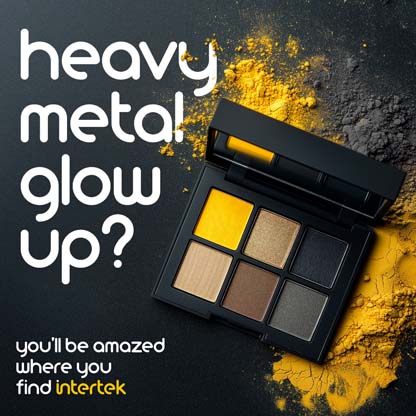
See this post on LinkedIn or learn more about our You'll Be Amazed campaign.
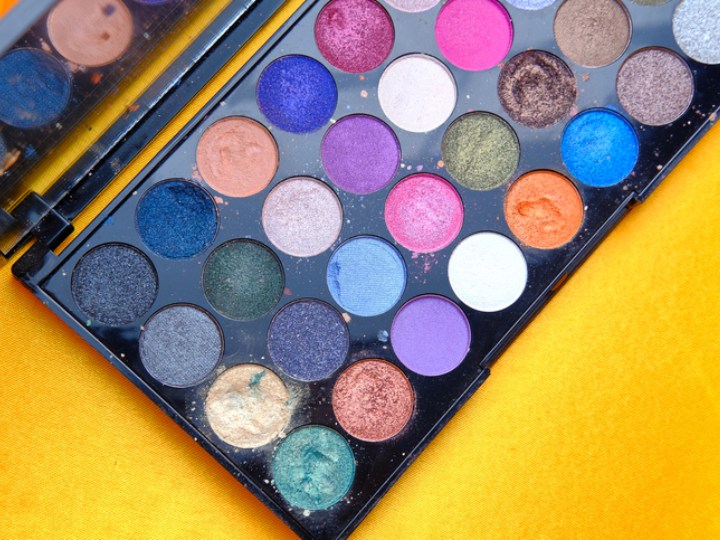
NEW!
Blog: Biotech in cosmetics: Peptides in skincare
ARTICLES
Case Study: Controlling TFA in Cosmetic Peptides
Article: Quantitative Analysis of Biomolecules in Cosmetics
Case Study: Determination of Formaldehyde in Cosmetics
Understanding the EU Cosmetics Regulation and Attaining Compliance
BROCHURE
Determination of 57 Allergens in Cosmetics
Intertek Analytical Services France
Etablissement de Chalon sur Saône
12 Rue Alfred Kastler, Boite N°7
F-71530 FRAGNES
France