Exploring Safety Elements out of Context (SEooC)

15 Jan 2026
What They Are, Why They Matter, and How They Extend Beyond Automotive
Modern automotive systems rely on increasingly complex supply chains. Advanced sensors, electronic control units (ECUs), motor controllers, power electronics, battery systems, and software libraries are sourced from suppliers who cannot always predict the final vehicle architecture or operational scenarios. To support this dynamic requirement, ISO 26262 introduced a uniquely flexible concept: the Safety Element out of Context (SEooC).
An SEooC allows a supplier to develop a safety-related hardware or software component before the final item-level design is fully known. This enables modular development, reuse across platforms, and accelerated safety certification. Yet the concept is often misunderstood – particularly regarding lifecycle tailoring and applicability outside the automotive domain.
This article provides a clear, technical overview of what SEooCs are, why they matter, how they tailor the lifecycle, and whether they can be reused across other functional safety frameworks (e.g., machinery, industrial, robotics, and energy).
What is an SEooC?
A Safety Element out of Context is a hardware or software component developed according to ISO 26262 without having a complete item-level system definition. Instead of receiving fully defined safety goals, system architecture, and operational conditions from an OEM, the supplier creates justified assumptions for the missing information.
These assumptions drive the derivation of safety requirements and form the basis of the element’s internal architecture, analyses, and validation.
Core Components of an SEooC
A robust SEooC typically includes:
- Assumptions of Use (AoU) – Conditions expected from the final system (ASIL allocation, timing constraints, diagnostic budgets, vehicle-level safety mechanisms).
- Assumptions of Environment (AoE) – Interfaces, electrical characteristics, communication protocols, environmental limits, integration constraints.
- Safety Requirements Specification – Derived from assumed hazards, system behavior, and intended safety goals.
- Safety Analyses – Hazard assumptions based on typical use cases, FMEA, FMEDA, FTA, interface analysis, dependent failure analysis, confirmation reviews.
- Safety Validation – Demonstrating the element fulfils its safety requirements under the assumed context.
- Safety Manual – The authoritative document that explains how the OEM must integrate, configure, test, and validate the SEooC.
Why SEooCs Matter in ISO 26262
SEooCs support modular, supplier-driven development
SEooCs allow suppliers to create safety-related products ahead of customer programs. This is essential when a microcontroller, inverter chip, software library, or actuator will be used across multiple OEM platforms.
They reduce time-to-market
Because development begins before the system is known, OEMs can integrate pre-evaluated safety elements rather than starting from scratch.
They create a clear assumption/guarantee contract
The Safety Manual defines:
- what the SEooC guarantees, and
- what conditions the OEM must guarantee in return.
This avoids ambiguity around responsibilities for diagnostics, timing, ASIL decomposition, and safe-state behavior.
They provide reusable safety artefacts
Suppliers can use safety analyses and architectural evaluations across customers, reducing costs while improving consistency and documentation quality.
Beyond their architectural and supply-chain advantages, SEooCs also introduce a unique capability within ISO 26262: the ability to tailor the lifecycle itself.
How SEooCs Enable Tailored ISO 26262 Lifecycle Application
One of the most powerful but widely misunderstood aspects of an SEooC is that it allows a supplier to tailor the ISO 26262 lifecycle. Because the SEooC is not a complete “item,” several system-level activities cannot be performed in their standard form.
ISO 26262 permits the supplier to adjust the lifecycle if the tailoring is justified and documented.
1. Concept-phase activities become assumption-driven
Normally, an OEM conducts a full hazard analysis and risk assessment (HARA) and develops the Functional Safety Concept (FSC).
For an SEooC, the supplier instead:
- defines assumed hazards
- assigns assumed safety goals
- allocates ASIL based on plausible system usage
- defines operational scenarios and boundary conditions
These become the foundation for generating downstream requirements.
2. System-level design reduces to internal architecture
An SEooC focuses only on its internal hardware/software architecture. The vehicle-level architecture is replaced by:
- assumptions about external safety mechanisms
- assumptions about timing or redundancy budgets
- explicit interface and integration constraints
3. Verification and validation are limited to what the supplier can control
An SEooC performs:
- requirement verification
- hardware/software architectural verification
- diagnostic effectiveness tests
- environmental and robustness tests
- validation against assumed conditions
Full vehicle-level validation is delegated to the OEM and outlined in the SEooC Safety Manual.
4. Some lifecycle phases become N/A or partially applicable
Activities such as item-level integration tests or full vehicle end-to-end safety validation cannot be performed.
ISO 26262 requires suppliers to:
- explicitly declare excluded or reduced lifecycle steps
- justify each exclusion
- explain how safety is preserved despite the tailoring
5. OEM responsibilities increase
Because lifecycle tailoring shifts integration and validation responsibility to the OEM, the Safety Manual becomes a critical safety artifact. If an OEM violates assumptions, the SEooC’s safety argument is no longer valid.
The Value of SEooCs: Benefits and Limitations
Benefits:
- Modularity across OEM platforms
- Reduced cost and delivery time
- Reusability of safety artefacts
- Clear allocation of responsibilities
- Negligible rework when new platforms adopt the same SEooC
- Improved architectural consistency across a product family
Limitations:
- Assumptions may not match real OEM usage
- OEM integration effort can be significant
- Misalignment can invalidate safety arguments
- An SEooC is not inherently ASIL-certified. It is developed to an assumed ASIL target, and the final ASIL only becomes valid after OEM integration
- Safety Manual compliance is essential but often neglected in practice
In practice, most SEooC integration issues arise not from technical failures but from violated assumptions documented in the Safety Manual.
Can SEooCs Be Used Outside Automotive?
This is a frequent question for suppliers working across automotive, machinery, robotics, industrial, and energy-storage applications.
The concept is universal
The idea of a pre-developed safety component, with assumptions and integration constraints, exists across many sectors:
- Certified SIL subsystems (IEC 61508 / 62061)
- PL/SRP/CS subsystems (ISO 13849-1)
- Certified Protective Devices (Machinery Regulation)
- Type-tested modules (UL / EN equipment standards)
But the term “SEooC” is ISO 26262-specific!
Other standards do not formally recognise the SEooC lifecycle model.
When reusing an SEooC in other domains
An SEooC can be reused outside automotive if its assumptions and evidence are adapted.
For example:
- An SEooC-based microcontroller used in a robot controller (ISO 13849 + IEC 61508)
- An SEooC BMS module used in a BESS (UL 1973 + IEC 61508)
- An SEooC motor-control ASIC used in an AGV (IEC 62061)
However:
- assumptions must be revalidated,
- architectural metrics may need recalculation (based on standard specific metrics SIL/PL, etc.),
- diagnostic coverage and fault modes may differ,
- and the safety case must be rewritten.
An SEooC is a starting point, not a cross-domain accepted certification.
Final Thoughts
SEooCs are one of ISO 26262’s most effective mechanisms for supporting modern supplier ecosystems. They enable modular development, scalable safety architectures, and efficient reuse of safety artefacts across platforms and programs. They also allow suppliers to tailor the ISO 26262 lifecycle responsibly, shifting certain responsibilities to the OEM while preserving the integrity of the safety argument. While the SEooC concept can extend to industrial, machinery, robotics, and energy systems, its formal processes remain unique to automotive. Cross-industry adoption requires reinterpreting assumptions, re-evaluating evidence, and adapting the safety case to match sector-specific frameworks.
If your organization is developing an SEooC – or intends to reuse SEooC artefacts outside automotive – Intertek can support with assumption modelling, lifecycle tailoring, safety manual creation, cross-standard mapping, and full functional safety consulting.

You may be interested in...
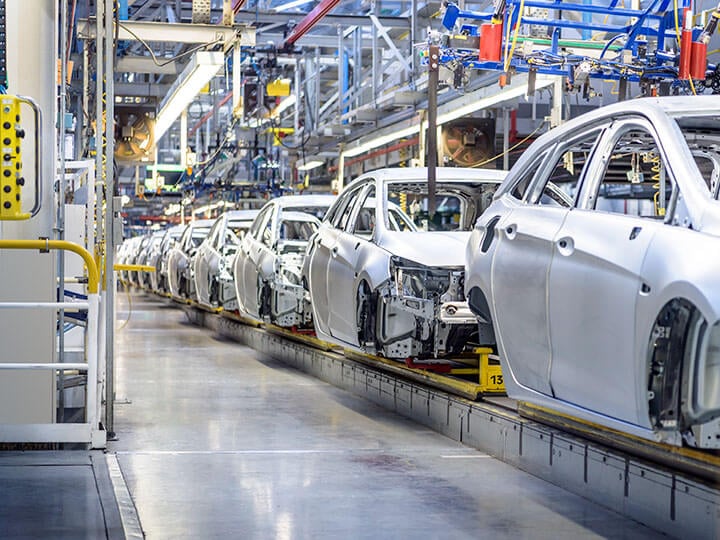
ISO 26262 - Automotive Functional Safety
Intertek offers a full scope of Automotive Functional Safety services to support ISO 26262 compliance, with a holistic analysis of a vehicles systems as an entire working unit
Industrial
We provide quality assurance, testing, inspection, and certification, as well as education and advisory services for your industrial production, equipment, assets, and processes with our expertise and diverse services across global operations and supply chains.