
Conformity Assessment and Certification Challenges for Diagnostic X-ray Equipment
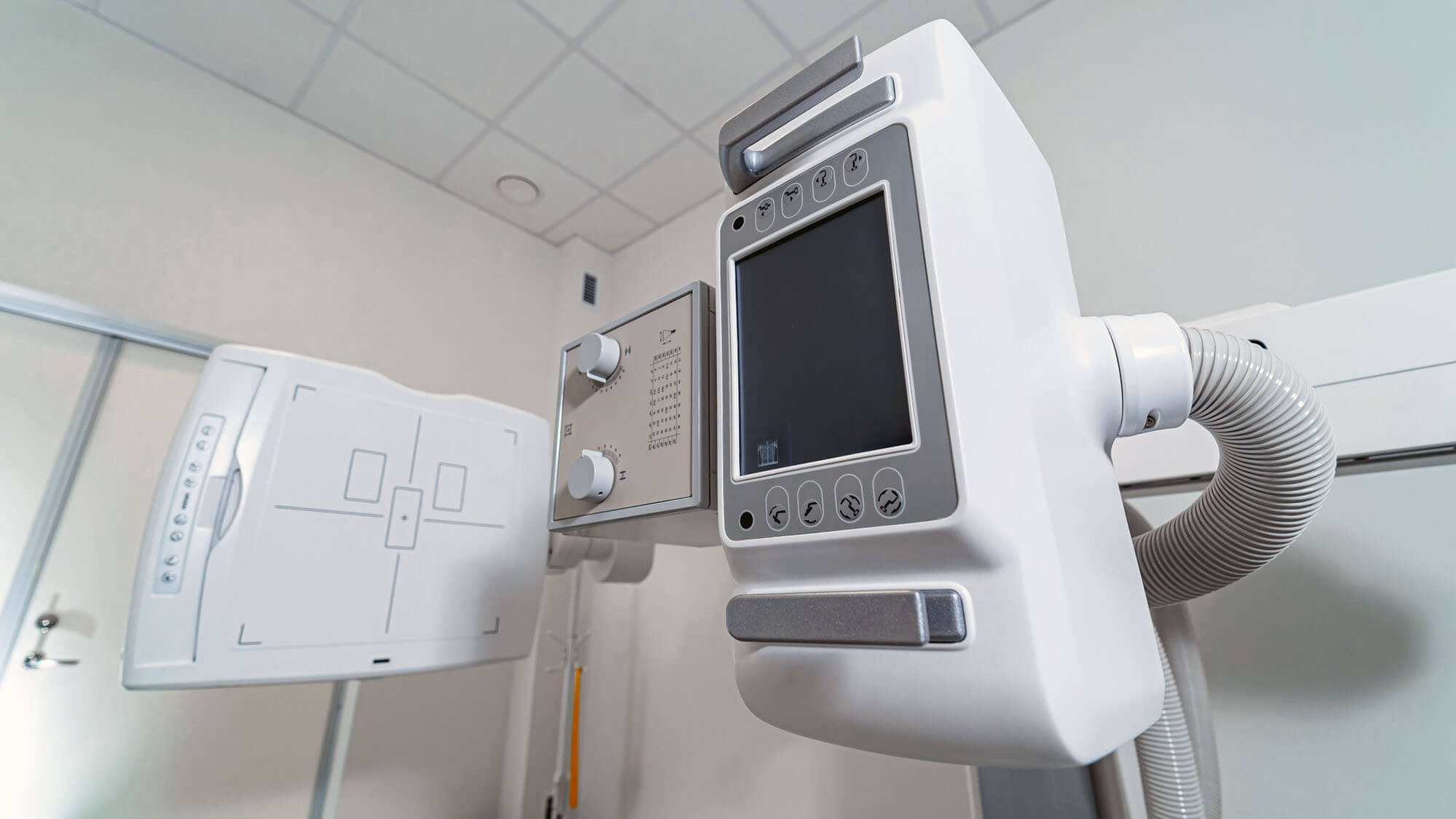
16 Jun 2026
Why Radiation Safety, Risk Management, and Early Design Decisions Matter
Medical X-ray systems are widely used in healthcare today. From fluoroscopy systems and CT scanners to dental imaging and interventional radiology equipment, these technologies play a critical role in diagnosis and treatment planning. But behind every image is a complex set of safety and performance requirements designed to help protect patients, operators, and healthcare environments.
For manufacturers, achieving compliance for X-ray equipment is rarely as simple as testing against a single standard. It requires understanding how multiple standards interact, how radiation risks are managed, and how documentation, component selection, and intended use all influence the evaluation process.
As medical imaging systems continue to evolve, manufacturers are also facing growing expectations around cybersecurity, global market access, and complex installations in hospitals and healthcare facilities.
Understanding IEC 60601-1-3 and Radiation Protection
One of the foundational standards for diagnostic X-ray equipment is IEC 60601-1-3, the collateral standard focused on radiation protection in diagnostic X-ray systems.
Manufacturers developing imaging equipment that uses X-ray technology typically apply IEC 60601-1 as the base standard for medical electrical equipment safety and essential performance. From there, IEC 60601-1-3 introduces additional requirements specifically related to radiation management and protection.
The goal is straightforward: ensure the equipment delivers useful diagnostic images while minimizing unnecessary radiation exposure.
That balance matters because X-radiation is a form of ionizing electromagnetic radiation. While it enables clinicians to see inside the body, it can also interact with human tissue in ways that can damage cells or DNA and therefore must be properly managed. This standard is intended to help manufacturers establish an acceptable benefit-risk balance while supporting safe and effective clinical use.
Importantly, IEC 60601-1-3 does not operate in isolation. It works alongside both the general standard and applicable particular standards that address specific categories of X-ray equipment.
The Role of Particular Standards
One of the most important aspects of X-ray equipment conformity assessment is identifying which particular standard applies to a product’s intended use.
For example, IEC 60601-2-43 applies to interventional X-ray equipment, while IEC 60601-2-54 applies to radiography and fluoroscopy systems. Other particular standards exist for CT systems, dental X-ray equipment, and image-guided radiotherapy systems.
These standards do more than add supplemental requirements. In many cases, they modify portions of both the general standard and the radiation protection collateral standard, IEC 60601-1-3.
That means manufacturers cannot evaluate the standards independently. The requirements work together as part of a larger conformity assessment framework addressing basic safety and essential performance including radiation protection, and risk management.
This is where early planning becomes especially important. Manufacturers that identify applicable standards at the beginning of development are typically in a much stronger position later in the project lifecycle.
Radiation Testing and System Safety
Radiation Quality
One of the most common physical assessments for X-ray production is a measure of the beam quality, called the half value layer. This assessment uses a measurement (or series of measurements) to determine what thickness of a reference material (typically pure aluminum) is required to attenuate the beam by half. The standard sets minimum values for this because a beam of low quality will be easily attenuated by layers of aluminum, whereas beam of high quality will require a much greater thickness of aluminum.
Leakage Radiation
X-ray testing also involves leakage radiation. X-ray tube assemblies are designed with shielding intended to reduce radiation, other than the x-ray beam emanating from its aperture intended for image production. Leakage radiation testing evaluates how effectively that shielding contains unintended radiation.
During testing, the aperture is blocked and measurements are taken around the equipment to determine how much radiation escapes through the shielding assembly. The allowable leakage radiation limit under the standard is critical to maintain. These evaluations help verify that patients, operators, and bystanders are not exposed to unnecessary radiation outside the intended imaging area.
Stray Radiation
Other testing that can be required includes measurements of stray radiation, which is a term that refers to all radiation except the radiation beam itself. Where certain procedures require the operator to be in close proximity to the patient during imaging, these tests are important for disclosures related to occupational exposure. An appropriate phantom representing the patient is placed in the beam path and a series of measurements are taken to characterize the stray radiation profile.
When it comes to other physical x-radiation tests, those specifically required by IEC 60601-1-3 are sparse as they are often specific to the intended use and therefore determined by particular standards. But conformity assessment extends beyond the physical tests themselves.
Why Documentation Often Creates the Biggest Challenges
When people approach test labs about medical electrical (ME) equipment conformity assessment and certification, the focus is often on physical testing. While testing is a very important objective metric for determining safety of a project, in reality it is only one part of the overall evaluation.
When it comes to X-ray equipment, many of the most common issues for conformity assessment are tied to documentation rather than test failures.
Manufacturers developing imaging systems are highly knowledgeable about their products. Their engineering teams can include specialists in physics, medicine, and imaging technologies. The designs themselves are developed with regulatory and international standards in mind. Yet, where projects sometimes encounter delays is in the supporting documentation.
Risk management, usability, software development lifecycle, and accompanying documentation (such as operation and installation manuals) all play a major role in medical electrical equipment evaluations. For example, in some cases manufacturers have assumed that because a particular standard modifies a requirement from the collateral standard (IEC 60601-1-3), certain risks no longer need to be addressed directly.
However, the standard may still require documented risk assessments for those scenarios.
That distinction is important. A missing or incomplete risk management assessment can create issues during an evaluation and delay completion, even if the physical equipment meets physical testing requirements.
The Importance of Certified Components and Early Design Planning
Component selection also has a major influence on project timelines and a favorable conformity assessment outcome.
X-ray tube assemblies, high-voltage generators, detectors, and related subassemblies may require their own certifications or specialized evaluations. When manufacturers use uncertified components, additional testing and investigation are often required, increasing both project complexity and cost.
This is one reason experienced manufacturers typically begin evaluating compliance requirements very early in product development.
Understanding which standards apply, selecting appropriately certified components, and planning for testing conditions upfront can help reduce delays later in the conformity assessment and certification process.
That preparation becomes even more important for large permanently installed systems commonly used in hospitals and healthcare facilities.
Looking Beyond the Test Lab
Many X-ray systems are too large or too specialized to evaluate entirely within a traditional test laboratory environment. As a result, testing is frequently conducted onsite at customer facilities using shielded rooms, protective equipment, and radiation monitoring procedures.
Large imaging systems can also create additional conformity assessment and compliance considerations tied to installation, labeling, local inspections, and jurisdictional requirements.
Manufacturers pursuing global market access must also understand that compliance expectations can vary between regions. A configuration accepted in one market may require additional evaluation or documentation elsewhere.
Cybersecurity is becoming increasingly relevant for medical imaging systems connected to hospital networks and healthcare infrastructure. While current editions of standards in the IEC 60601 series addressed cybersecurity only minimally, future revisions are expected to place far greater emphasis on connected device security.
For manufacturers, that means X-ray compliance is no longer just about radiation and electrical safety. It is becoming part of a much broader conversation around software, connectivity, risk management, and system-level resilience.
As imaging technologies continue to advance, manufacturers that take a proactive approach to compliance early in development will be better positioned to improve efficiency, reduce delays, and bring safer products to market with confidence.

You may be interested in...
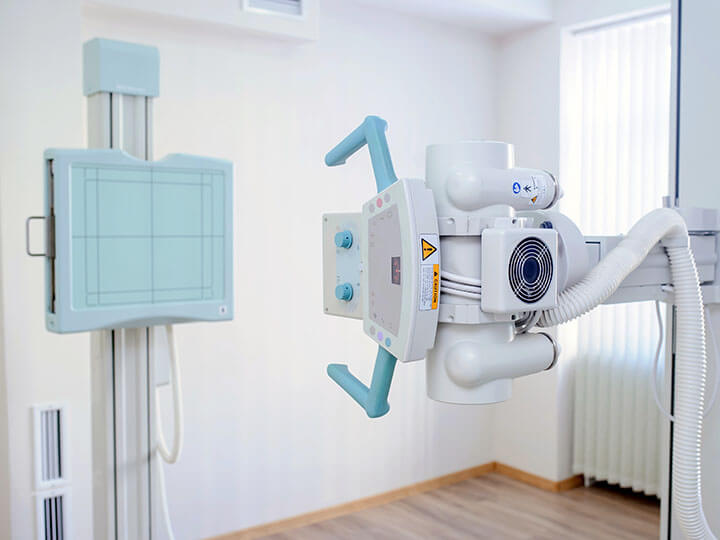
IEC 60601-1-3 Testing and Compliance for Diagnostic X-Ray Equipment
IEC 60601-1-3 establishes the foundational requirements for radiation protection in diagnostic X-ray equipment, helping manufacturers ensure safety without compromising clinical performance.
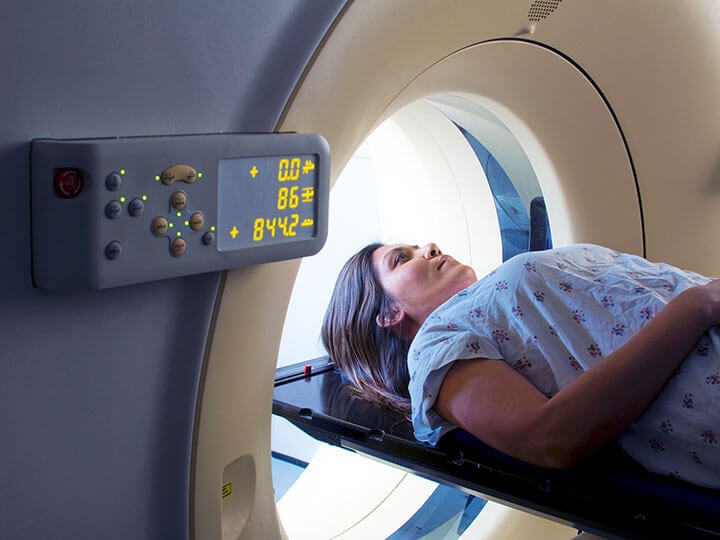
Medical Imaging Equipment Testing
Expert Medical Imaging Equipment Testing and Certification solutions ensuring your medical imaging equipment meets all applicable safety requirements.

Medical Compliance With Clarissa - X-ray Compliance with Kris Spoth
Clarissa Benfield is joined by Intertek Staff Engineer Kris Spoth to discuss compliance requirements for diagnostic X-ray medical devices. The conversation explores IEC 60601-1-3 radiation safety requirements, X-ray particular standards, leakage radiation testing, common compliance challenges, and the importance of risk management documentation.