
Beyond Compliance: Rethinking the IEC 60601-1 Risk Management File for Modern Medical Devices
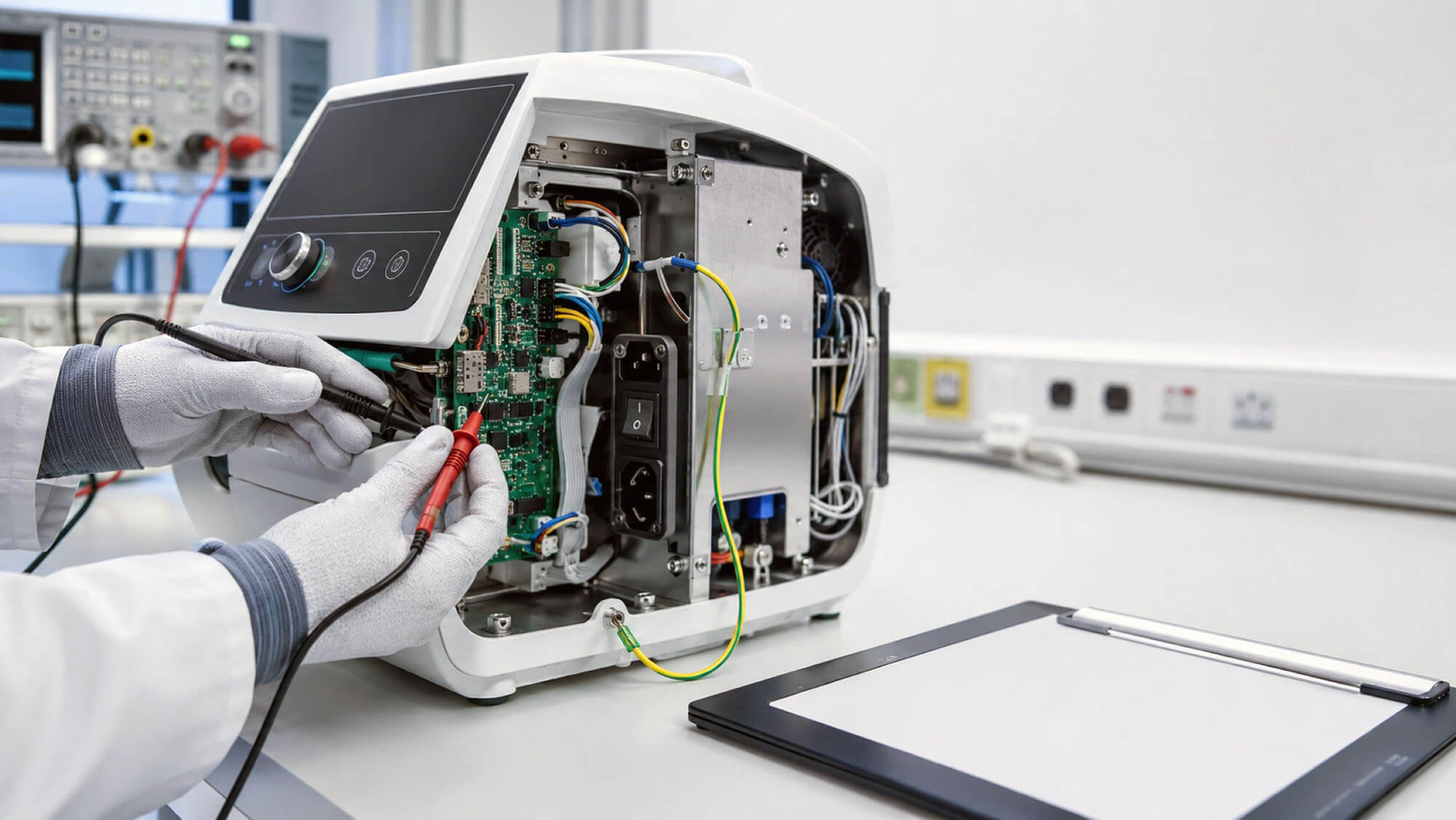
11 Sep 2026
Strategies for Reducing Findings, Delays, and Certification Risk as Medical Devices Grow More Complex
For many manufacturers, the Risk Management File (RMF) associated with IEC 60601-1 has traditionally been viewed as a regulatory deliverable: a collection of documents assembled to demonstrate compliance with the standard and support product certification. While this approach may have been sufficient for relatively simple medical electrical equipment, it no longer reflects the complexity of today’s medical technologies or the expectations of regulators and certification bodies.
Modern medical devices rarely operate as isolated systems. Embedded software, wireless communications, cloud connectivity, mobile applications, cybersecurity controls, artificial intelligence, and networked accessories have transformed how devices function and how risks emerge.
As technology has evolved, so too has the expectation that risk management extends beyond individual component failures to encompass interactions among hardware, software, users, operating environments, and connected systems. Increasingly, the Risk Management File is expected to demonstrate that manufacturers have identified relevant hazards and understand how complex systems behave under both normal and reasonably foreseeable abnormal conditions.
Connecting Risk Management to IEC 60601-1
IEC 60601-1 does not prescribe a standalone risk management methodology. Instead, it relies on the principles established in ISO 14971, integrating risk management throughout the design, verification, and validation process. This relationship is often underestimated.
Compliance with IEC 60601-1 is no longer achieved simply by passing electrical safety testing. Manufacturers are expected to show that the design decisions supporting electrical safety, including insulation, Means of Protection (MOP), alarms, software controls, thermal protection, and Single Fault Condition performance, are directly traceable to identified hazards, implemented risk controls, and objective verification evidence documented within the Risk Management File.
Software Controls Require Equal Rigor
One area where this evolution is particularly evident is software. In many contemporary medical devices, software is no longer limited to user interface functions or workflow management.
It increasingly performs safety-related tasks, including monitoring system health, validating sensor inputs, managing alarms, supervising battery charging, controlling therapy delivery, and transitioning devices into predefined safe states. These software-based risk controls require the same level of justification, verification, and traceability as traditional hardware protections.
A robust Risk Management File should clearly demonstrate how software contributes to risk reduction, how software failures have been considered, and how residual risks have been evaluated in accordance with the software lifecycle processes defined in IEC 62304.
Connecting Cybersecurity and Patient Safety
Cybersecurity has also become an integral consideration in risk management. Although IEC 60601-1 is not a cybersecurity standard, vulnerabilities affecting the availability, integrity, or authenticity of safety-related functions can have direct implications for patient safety.
As a result, manufacturers are expected to evaluate how cybersecurity events could influence identified hazards, compromise existing risk controls, or introduce new hazardous situations. This systems-based perspective aligns with standards such as IEC 81001-5-1 and reflects broader regulatory expectations that safety and security risks should not be managed independently.
Managing the Uncertainty of AI-Enabled Systems
Artificial intelligence and adaptive algorithms present another emerging challenge. Unlike conventional deterministic software, AI-enabled systems may exhibit behavior that changes because of training data, environmental variability, or algorithmic updates. Traditional hazard analyses based solely on predictable component failures may therefore be insufficient.
Manufacturers should consider how algorithm performance, data quality, model drift, transparency, human oversight, and clinical decision support influence the device’s overall safety profile.
As these technologies continue to mature, Risk Management Files will need to evolve from static documents into living records that reflect ongoing performance monitoring, post-market feedback, and continuous risk evaluation.
From Compliance Artifact to Engineering Record
Perhaps the most significant shift is that the Risk Management File should no longer be viewed as documentation produced after design decisions have been made. Instead, it should serve as the central engineering record capturing why decisions were made, how risks were reduced, and how safety has been demonstrated throughout the product lifecycle.
When integrated effectively, the Risk Management File provides traceability among system requirements, design inputs, hazard analyses, verification activities, usability engineering, software development, cybersecurity controls, and post-market surveillance. It becomes a repository of engineering knowledge rather than a compliance artifact.
As medical devices continue to increase in complexity, manufacturers that treat risk management as an ongoing engineering discipline, rather than simply a regulatory obligation, will be better positioned to respond to changing standards, evolving technologies, and expanding regulatory expectations.
A well-developed Risk Management File is no longer merely evidence that a device has met the minimum requirements of IEC 60601-1. It is evidence that safety has been intentionally engineered into the product from concept through commercialization and beyond.

You may be interested in...

Overview of IEC 60601-1 Standards and References
End-to-end solutions from product development and risk management file reviews to comprehensive testing to the IEC 60601-1 series.
Creation of IEC 60601-1 4th Edition
Stay ahead in medical device compliance with our exclusive webinar on the IEC 60601-1 4th Edition updates. Learn about critical changes, streamlined standards, and how to future-proof your designs for global markets.

Visit our Medical Resources Hub and stay up to date with industry trends, changing standards and market opportunities with white papers, on-demand webinars, FAQs, and fact sheets.