
New Zealand proposes mandatory asbestos testing for toys and craft products containing sand
Vol. 1553 | 10 Sep 2026
New Zealand is proposing mandatory asbestos testing for toys and craft products containing sand under a draft Unsafe Goods Notice. Suppliers would need recent, accredited laboratory results showing no asbestos detected before importing or supplying affected products.
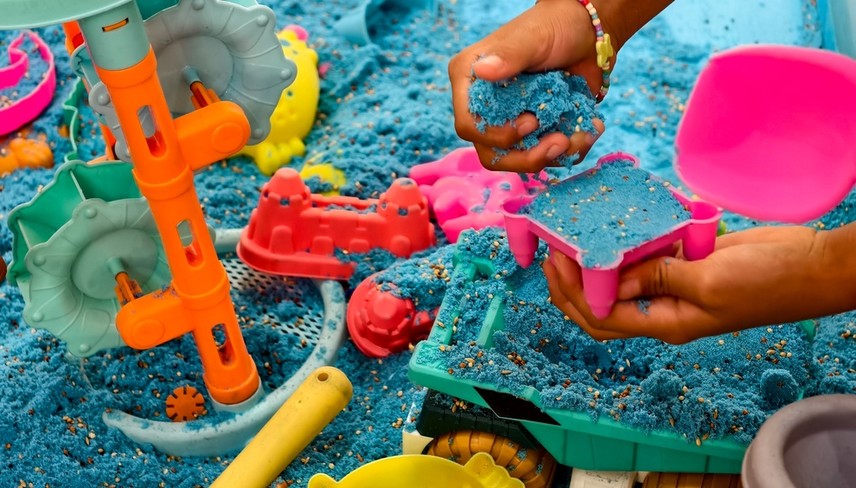
New Zealand is proposing to make it unlawful to import or supply most toys containing sand, and most decorative, craft and artistic products containing accessible sand, unless the supplier holds a laboratory test result showing no asbestos was detected. The Ministry of Business, Innovation and Employment (MBIE) released the draft Unsafe Goods (Consumer Sand Products) Notice 2026 for consultation on 4 September 2026.
Scope
The draft applies to two categories of goods:
- toys that are, include, or contain sand; and
- decorative, craft or artistic goods that are sand, or that include or contain accessible sand.
For toys, the notice reaches sand sealed inside the product as well as sand a child can touch, on the reasoning that toys break and get used in ways the designer did not intend. For decorative and craft goods, the trigger is "accessible sand," defined as sand a consumer may handle during ordinary use.
Sand produced by natural geological processes and intended to fill sand pits, playgrounds, or other recreational areas is outside the scope.
If this proposal is adopted, the following requirements will apply:
Testing requirements
Each product must be tested for asbestos. The analytical requirements are prescriptive:
- Method: transmission electron microscopy, or a combination of scanning electron microscopy with energy-dispersive X-ray analysis.
- Standard: ISO 22262-2:2026, Air quality — Bulk materials — Part 2: Quantitative determination of asbestos by gravimetric and microscopical methods, incorporated by reference.
- Laboratory: accredited to ISO/IEC 17025:2017 by an accreditation body that is a signatory to the ILAC Mutual Recognition Arrangement.
- Scope: the method used must fall within the laboratory's accreditation scope.
Documentation requirements
A test certificate, test report, test result, or equivalent record is required. The record must:
- be dated no more than 12 months before the goods are imported into, or manufactured in, New Zealand;
- clearly identify the product or product variant it covers;
- identify the testing laboratory;
- specify the analytical method used and the standard applied;
- state the date or date range of testing; and
- state that no asbestos was detected
If you have any questions, please contact:

Subscribe to Consumer Products Insight Bulletins
Subscribe now to receive the latest regulatory updates on consumer products safety requirements, market trends, and compliance insights directly to your inbox.

Global Market Access (GMA) Knowledge Portal
Gain instant access to real-time compliance information for 180 product types in over 40 different markets with our Global Market Access platform. Unlock essential resources such as regulatory sheets, test plans, recall summaries, and gap analyses with just a few clicks.